Course information
Are you fascinated by the psychology of competitive sport or keen to better understand the role of exercise in supporting psychological wellbeing and societal health? Do you find yourself asking why some people thrive under pressure while others struggle during high pressure moments in a game. At Hartpury University, we’ll help you turn that curiosity into a career that makes a real difference.
Our BSc (Hons) Psychology with Sport and Exercise Perspectives degree is designed to give you far more than textbook knowledge. Rooted in real-world application, this course offers practical experiences not widely available elsewhere.
You'll follow a practical psychology curriculum that covers all the core areas of psychology required by the British Psychological Society for accreditation (e.g., biological, cognitive, developmental, and social psychology), all whilst offering a unique curriculum that aligns with Hartpury's strengths and facilities in sport, exercise, agriculture, health, education, and inclusive of innovative approaches such as animal-assisted and green therapy. Practical experiences will be enabled by facilities including 360 hectares of open spaces with running/walking routes, multi-sports hall, 3G pitches, floodlit rugby and football pitches, indoor courts, power and cross-training gyms, and a Golf driving range. Place based learning will be facilitated by university sports academies including; Equine, Men's and Women's Rugby, Men's and Women's Football, Rowing, Golf, Netball, and the Athlete Performance Academy.
With a curriculum delivered by staff registered with the Health and Care Professions Council (HCPC) and specialist guest lecturers, cutting-edge insights are brought into teaching and learning directly from experts in psychology. With the benefits of this expertise, you'll develop your knowledge of key psychological theories and concepts through practical activities across a range of contexts. Every aspect of our programme is designed around one core principle: creating positive impacts for people and communities. As a Hartpury graduate in Psychology with Sport and Exercise Perspectives the practical emphasis of the curriculum will leave you well-positioned to pursue a career in psychology or psychology related disciplines.
UCAS tariff points | 112 UCAS tariff points.
A Levels | BBC or equivalent from at least two full A Levels.
Vocational Awards | DMM in an Extended Diploma in a relevant subject.
Access | 112 UCAS tariff points in an Access to Higher Education Diploma.
International Baccalaureate | 112 UCAS tariff points in an IB Diploma, to include two Highers at H3 or above.
Scottish Highers | 112 UCAS tariff points from at least two Highers. You must have completed two years study at Higher Level.
Irish Leaving Certificate | 112 UCAS tariff points from at least two Highers.
T Level | An overall grade of Merit, to include grade C or above in the Core component.
Additional Information
A Level 3 qualification in Psychology, Physical Education or Sports Science is desirable.
In addition to the above, we require a minimum of five GCSEs at grade 9-4 (A*-C), to include English, Maths and a science. We will consider equivalencies including but not limited to functional skills level 2, Irish Ordinary level, National 5s, IB standard level.
We will consider combinations of level three qualifications.
We welcome applications from individuals with equivalent, non-UK qualifications and mature students (over 21). We may interview as part of the application process.
The minimum academic entry requirement for this programme is 80 UCAS tariff points, providing this is combined with relevant experience.
International students
Please read the entry requirements for your country and contact our admissions team if you have any questions.
Industry links within this course are diverse to ensure you develop the skills, experience and connections needed for your graduate career. Industry professionals and psychology specialists will provide guest lectures across the curriculum offering insights into different applications of sport and exercise psychology.
Continued Professional Development is a key part of the Psychology with Sport and Exercise Perspectives curriculum. Although not compulsory, Hartpury University may host or promote various extra-curricular activities and courses. Prices will vary depending on the nature and duration of the course, as well as the external provider.
In completing the BSc (Hons) Psychology with Sport and Exercise Perspectives, you'll also gain the transferable skills you need for other graduate careers. Our careers team can support you to find and prepare you for employment.
Graduate destinations
You could progress into a range of careers including:
- Working within professional sports settings
- Working within healthcare and social services
- Pursuing a career in an alternative psychology field
- Working with vulnerable individuals alongside charities
- Postgraduate study
Your support network
You’ll have your own personal tutor while you’re here who will support you to succeed in your studies. You’ll also have access to our academic and wellbeing support teams, including learning support (Achievement and Success Centre) and employability (Employability, Skills and Careers) centres who run regular workshops and one-to-one sessions on campus and online.
Alongside this, we have a comprehensive bank of online study skills resources to help you make the most of your qualification.
Teaching mode and contact
Each year of your course will be made up of two semesters, within which you’ll study compulsory modules that cover the core areas of psychology required by the British Psychological Society for accreditation (e.g., biological, cognitive, developmental, and social psychology), building your portfolio of knowledge, skills and experience, ready for your future career.
The course will be delivered through a series of taught lectures, online learning, practical seminars/activities, alongside independent learning to highlight and develop the competencies required for a career in psychology. The course will utilise a variety of learning and teaching methods to encourage reflective and critical thinking and research skills, enabling you to become confident and autonomous learners. You will develop sound academic competencies so that you are readily employable and well-equipped for lifelong learning.
The course is taught in English.
Assessments
You will be assessed using a range of methods including written coursework assignments, oral presentations, case studies and practical work. There are formative assessment opportunities within all modules to help you prepare for summative assessments. Following completion of any summative assessment, you will receive feedback on your performance, as well as guidance on how to improve for future assessments.
Course information
Overview
Are you fascinated by the psychology of competitive sport or keen to better understand the role of exercise in supporting psychological wellbeing and societal health? Do you find yourself asking why some people thrive under pressure while others struggle during high pressure moments in a game. At Hartpury University, we’ll help you turn that curiosity into a career that makes a real difference.
Our BSc (Hons) Psychology with Sport and Exercise Perspectives degree is designed to give you far more than textbook knowledge. Rooted in real-world application, this course offers practical experiences not widely available elsewhere.
You'll follow a practical psychology curriculum that covers all the core areas of psychology required by the British Psychological Society for accreditation (e.g., biological, cognitive, developmental, and social psychology), all whilst offering a unique curriculum that aligns with Hartpury's strengths and facilities in sport, exercise, agriculture, health, education, and inclusive of innovative approaches such as animal-assisted and green therapy. Practical experiences will be enabled by facilities including 360 hectares of open spaces with running/walking routes, multi-sports hall, 3G pitches, floodlit rugby and football pitches, indoor courts, power and cross-training gyms, and a Golf driving range. Place based learning will be facilitated by university sports academies including; Equine, Men's and Women's Rugby, Men's and Women's Football, Rowing, Golf, Netball, and the Athlete Performance Academy.
With a curriculum delivered by staff registered with the Health and Care Professions Council (HCPC) and specialist guest lecturers, cutting-edge insights are brought into teaching and learning directly from experts in psychology. With the benefits of this expertise, you'll develop your knowledge of key psychological theories and concepts through practical activities across a range of contexts. Every aspect of our programme is designed around one core principle: creating positive impacts for people and communities. As a Hartpury graduate in Psychology with Sport and Exercise Perspectives the practical emphasis of the curriculum will leave you well-positioned to pursue a career in psychology or psychology related disciplines.
Entry requirements
UCAS tariff points | 112 UCAS tariff points.
A Levels | BBC or equivalent from at least two full A Levels.
Vocational Awards | DMM in an Extended Diploma in a relevant subject.
Access | 112 UCAS tariff points in an Access to Higher Education Diploma.
International Baccalaureate | 112 UCAS tariff points in an IB Diploma, to include two Highers at H3 or above.
Scottish Highers | 112 UCAS tariff points from at least two Highers. You must have completed two years study at Higher Level.
Irish Leaving Certificate | 112 UCAS tariff points from at least two Highers.
T Level | An overall grade of Merit, to include grade C or above in the Core component.
Additional Information
A Level 3 qualification in Psychology, Physical Education or Sports Science is desirable.
In addition to the above, we require a minimum of five GCSEs at grade 9-4 (A*-C), to include English, Maths and a science. We will consider equivalencies including but not limited to functional skills level 2, Irish Ordinary level, National 5s, IB standard level.
We will consider combinations of level three qualifications.
We welcome applications from individuals with equivalent, non-UK qualifications and mature students (over 21). We may interview as part of the application process.
The minimum academic entry requirement for this programme is 80 UCAS tariff points, providing this is combined with relevant experience.
International students
Please read the entry requirements for your country and contact our admissions team if you have any questions.
Employability
Industry links within this course are diverse to ensure you develop the skills, experience and connections needed for your graduate career. Industry professionals and psychology specialists will provide guest lectures across the curriculum offering insights into different applications of sport and exercise psychology.
Continued Professional Development is a key part of the Psychology with Sport and Exercise Perspectives curriculum. Although not compulsory, Hartpury University may host or promote various extra-curricular activities and courses. Prices will vary depending on the nature and duration of the course, as well as the external provider.
In completing the BSc (Hons) Psychology with Sport and Exercise Perspectives, you'll also gain the transferable skills you need for other graduate careers. Our careers team can support you to find and prepare you for employment.
Graduate destinations
You could progress into a range of careers including:
- Working within professional sports settings
- Working within healthcare and social services
- Pursuing a career in an alternative psychology field
- Working with vulnerable individuals alongside charities
- Postgraduate study
How you'll study
Your support network
You’ll have your own personal tutor while you’re here who will support you to succeed in your studies. You’ll also have access to our academic and wellbeing support teams, including learning support (Achievement and Success Centre) and employability (Employability, Skills and Careers) centres who run regular workshops and one-to-one sessions on campus and online.
Alongside this, we have a comprehensive bank of online study skills resources to help you make the most of your qualification.
Teaching mode and contact
Each year of your course will be made up of two semesters, within which you’ll study compulsory modules that cover the core areas of psychology required by the British Psychological Society for accreditation (e.g., biological, cognitive, developmental, and social psychology), building your portfolio of knowledge, skills and experience, ready for your future career.
The course will be delivered through a series of taught lectures, online learning, practical seminars/activities, alongside independent learning to highlight and develop the competencies required for a career in psychology. The course will utilise a variety of learning and teaching methods to encourage reflective and critical thinking and research skills, enabling you to become confident and autonomous learners. You will develop sound academic competencies so that you are readily employable and well-equipped for lifelong learning.
The course is taught in English.
Assessments
You will be assessed using a range of methods including written coursework assignments, oral presentations, case studies and practical work. There are formative assessment opportunities within all modules to help you prepare for summative assessments. Following completion of any summative assessment, you will receive feedback on your performance, as well as guidance on how to improve for future assessments.
A specialist setting
Modules
What you'll study
Across your three years of study, a progressively deeper expertise is built in psychology and its application to sport and exercise. Year one introduces all seven BPS core areas: social, biological, cognitive, developmental, individual differences, conceptual and historical issues. You'll explore research methods alongside an exploration of how psychology is applied in sport and exercise contexts for the benefit of performance and health.
In year two, the seven core areas are revisited in greater depth, strengthening understanding of human behaviour across contexts. Teaching is enriched by lecturers who are practising Sport and Exercise Psychologists registered with the Health and Care Professions Council, providing real-world insight into applied practice. Consideration of real-world questions relevant to high performance sport and exercise for health is facilitated by the nine thriving sports academies at Hartpury University.
By year three, contemporary issues in sport and exercise psychology are examined and the contexts in which psychological interventions are designed and delivered. An independent research project is completed under expert supervision which allows focused investigation of an area of interest.
In your first year, you'll explore all seven BPS core areas: social, biological, cognitive, developmental, individual differences, conceptual and historical issues, and research methods. You'll also examine the application of psychology in sport and exercise contexts, incorporating our unique strengths in sport, exercise, health, education, and innovative approaches such as animal-assisted and green therapy.
Compulsory Modules
Psychology Past and Present
Psychology Past and Present provides an engaging introduction to psychology by tracing its evolution from ancient philosophical traditions to contemporary scientific practice. This module explores how psychology has emerged as a distinct discipline, examining key studies and theoretical developments that have shaped the discipline, whilst evaluating the ethical challenges that have informed modern practice standards. You'll discover how psychological knowledge addresses real world questions and consider psychology's future in an era of technological advancement and global interconnection.
Professional Skills in Psychology
Professional skills in psychology introduces you to the professional and ethical foundations of psychology as both a scientific discipline and an applied practice. It focuses on developing key professional skills required for ethical, reflective and inclusive psychological practice. You'll explore the importance of diversity, cultural humility and communication, while also learning strategies for self-care and ongoing personal and professional development.
Introducing Cognitive and Biological Psychology
This module introduces you to cognitive and biological approaches in psychology. Supported by practical work, this module will provide you with an understanding of how cognitive processes such as perception, memory, and decision-making are supported or influenced by biological mechanisms including neural, hormonal, and neurochemical systems.
Introducing Social and Developmental Psychology
This module introduces you to social and developmental psychology, exploring how individual behaviour is shaped by social contexts and how humans develop cognitively, emotionally, and socially. Supported by practical work, you'll examine key theories, classic and contemporary studies, and the methods psychologists use to investigate these areas.
Introductory Research Methods in Psychology
This module introduces the principles and practices of psychological research. This will include an introduction to qualitative, quantitative, and mixed methods approaches, enabling students to understand how psychological evidence is generated, evaluated, and communicated. You'll develop research design skills, ethical awareness, and the ability to engage with empirical literature. You'll be introduced to key research software tools used in psychology and will also gain experience in writing research reports.
Introduction to the Psychology of Sport and Exercise
Within this module you'll examine the history and development of sport and exercise psychology as a profession. You'll explore how psychological theory and research helps understand behaviour, motivation, and performance enhancement in sport and exercise contexts, applying psychological theory to real world scenarios. The module will support you to self-reflect on personal interests, skills, and career pathways in sport and exercise psychology.
In your second year, you'll study the seven core areas of psychology in greater depth, supporting breadth and depth of understanding of human behaviour across various contexts. Specialist guest lecturers alongside our own Sport and Exercise Psychologists registered with the Health and Care Professions Council will enable real-world and applied illustrations of theory and concepts relevant to practice in sport and exercise domains.
Compulsory Modules
Social and Cultural Psychology
In this module, you'll engage with theories, empirical research, and applied perspectives to explore how individuals are shaped by social interactions, group dynamics, and cultural contexts. You'll be supported to apply psychological principles to real world issues and to communicate research-informed insights effectively to diverse audiences.
Brain and Behaviour
You'll explore in greater depth the biological and cognitive bases of behaviour, learning about different methodological approaches, and integrating perspectives from biopsychology and cognitive psychology. You'll examine how brain processes give rise to cognition, emotion, motivation, and behaviour, and how these processes vary between individuals. By engaging with and evaluating current debates, you'll develop your understanding of the dynamic interplay between brain, cognition, and behaviour.
Advanced Research Methods in Psychology
This module engages you with contemporary ethical principles, methodological debates, and data analysis techniques, applying these to the design and evaluation of psychological research. Emphasis is placed on developing practical competence in formulating research questions, selecting appropriate methodologies, analysing complex data, and interpreting findings within the context of existing theory and evidence, thereby preparing you for independent empirical research. The module supports interdisciplinary collaboration and co-construction through ‘Think Tanks’ that connect psychology students with peers and staff from other academic and professional areas at Hartpury, broadening perspectives on research application and impact.
Lifespan Development
This module provides a comprehensive examination of the processes of psychological development and continuity across the entire lifespan human, from prenatal through to the end of life. You'll evaluate major theoretical frameworks and research in developmental psychology translating this into practical interventions designed to enhance development or support maintenance of functioning across different life stages.
Individual Differences
In completing this module, you'll explore theoretical perspectives and empirical research underpinning individual differences psychology gaining an understanding of how psychological assessment and measurement are used to study human differences. Emphasis is placed on developing skills in the analysis and interpretation of individual differences data, as well as an appreciation of the applied and ethical considerations involved in psychological assessment.
Applications of Psychology in Sport and Exercise Environments
Explore how psychological theories, concepts, and research are applied to enhance performance, participation, and wellbeing in sport and exercise settings. Emphasis is placed on bridging the gap between theory and practice, considering how to communicate psychological concepts effectively to specialist and non-specialist audiences, and exploring how psychological evidence can contribute to problem-solving, policy-making, and professional interventions.
In your third year, you'll have the opportunity to consolidate your learning from years one and two by applying this to contemporary issues in sport and exercise psychology, and in developing your understanding of the contexts in which psychological interventions are developed and delivered. You'll also complete an independent research project under expert supervision, which allows focused investigation of an area of interest.
Compulsory Modules
Professional Practice and Standards in Psychology
This module supports you in preparing to transition from undergraduate study by supporting critical self-reflection and professional identity development. You'll explore diverse career pathways in psychology and the professional competencies required for effective practice. Through engagement with professional bodies' standards (BPS, HCPC) and ‘meet the expert’ sessions, you'll strengthen your understanding of what it means to be a professional psychologist in contemporary practice contexts.
Evidence-Based Practice in Wellbeing
In this module you'll evaluate evidence-based wellbeing practice through a critical examination of theories, research, and applied approaches within health psychology. You'll explore how psychological wellbeing interacts with physical health, and consider the individual, societal, ethical, and contextual factors that should be accounted for in developing therapeutic approaches and interventions.
Positive Psychology
This module critically examines the theoretical foundations, historical development, and contemporary applications of positive psychology. Using contemporary research on human strengths, flourishing, and positive emotions, you'll explore the strengths and limitations of commonly used interventions.
Psychology Dissertation
This module enables you to undertake an independent psychological empirical project on a negotiated topic with supervisory guidance. Building on experiences provided at Level 4 and Level 5, you'll design, conduct and report a substantial research project that critically situates your findings within the psychological literature. This module emphasises ethical practice, project management, digital competence, and the development of research skills appropriate for graduate-level study or further professional pathways.
Advances in Sport and Exercise Psychology
Critically explore contemporary theory, research, and practice in sport and exercise psychology. You'll develop your understanding of different philosophical approaches underpinning professional practice and consider the practical implications of these for intervention design and delivery. The module emphasises evidence-based problem-solving and equips you to critically evaluate and apply psychological theory to address real world challenges in sport and exercise settings.
Contemporary Issues in Sport and Exercise Psychology
This module provides a research-informed exploration of current challenges, debates, and emerging topics facing athletes, exercisers, practitioners, and researchers in the field. Each issue is critically explored through different philosophical lenses, developing your ability to construct evidence-based arguments for academic audiences.
Modules
Overview
What you'll study
Across your three years of study, a progressively deeper expertise is built in psychology and its application to sport and exercise. Year one introduces all seven BPS core areas: social, biological, cognitive, developmental, individual differences, conceptual and historical issues. You'll explore research methods alongside an exploration of how psychology is applied in sport and exercise contexts for the benefit of performance and health.
In year two, the seven core areas are revisited in greater depth, strengthening understanding of human behaviour across contexts. Teaching is enriched by lecturers who are practising Sport and Exercise Psychologists registered with the Health and Care Professions Council, providing real-world insight into applied practice. Consideration of real-world questions relevant to high performance sport and exercise for health is facilitated by the nine thriving sports academies at Hartpury University.
By year three, contemporary issues in sport and exercise psychology are examined and the contexts in which psychological interventions are designed and delivered. An independent research project is completed under expert supervision which allows focused investigation of an area of interest.
Level four (year one)
In your first year, you'll explore all seven BPS core areas: social, biological, cognitive, developmental, individual differences, conceptual and historical issues, and research methods. You'll also examine the application of psychology in sport and exercise contexts, incorporating our unique strengths in sport, exercise, health, education, and innovative approaches such as animal-assisted and green therapy.
Compulsory Modules
Psychology Past and Present
Psychology Past and Present provides an engaging introduction to psychology by tracing its evolution from ancient philosophical traditions to contemporary scientific practice. This module explores how psychology has emerged as a distinct discipline, examining key studies and theoretical developments that have shaped the discipline, whilst evaluating the ethical challenges that have informed modern practice standards. You'll discover how psychological knowledge addresses real world questions and consider psychology's future in an era of technological advancement and global interconnection.
Professional Skills in Psychology
Professional skills in psychology introduces you to the professional and ethical foundations of psychology as both a scientific discipline and an applied practice. It focuses on developing key professional skills required for ethical, reflective and inclusive psychological practice. You'll explore the importance of diversity, cultural humility and communication, while also learning strategies for self-care and ongoing personal and professional development.
Introducing Cognitive and Biological Psychology
This module introduces you to cognitive and biological approaches in psychology. Supported by practical work, this module will provide you with an understanding of how cognitive processes such as perception, memory, and decision-making are supported or influenced by biological mechanisms including neural, hormonal, and neurochemical systems.
Introducing Social and Developmental Psychology
This module introduces you to social and developmental psychology, exploring how individual behaviour is shaped by social contexts and how humans develop cognitively, emotionally, and socially. Supported by practical work, you'll examine key theories, classic and contemporary studies, and the methods psychologists use to investigate these areas.
Introductory Research Methods in Psychology
This module introduces the principles and practices of psychological research. This will include an introduction to qualitative, quantitative, and mixed methods approaches, enabling students to understand how psychological evidence is generated, evaluated, and communicated. You'll develop research design skills, ethical awareness, and the ability to engage with empirical literature. You'll be introduced to key research software tools used in psychology and will also gain experience in writing research reports.
Introduction to the Psychology of Sport and Exercise
Within this module you'll examine the history and development of sport and exercise psychology as a profession. You'll explore how psychological theory and research helps understand behaviour, motivation, and performance enhancement in sport and exercise contexts, applying psychological theory to real world scenarios. The module will support you to self-reflect on personal interests, skills, and career pathways in sport and exercise psychology.
Level five (year two)
In your second year, you'll study the seven core areas of psychology in greater depth, supporting breadth and depth of understanding of human behaviour across various contexts. Specialist guest lecturers alongside our own Sport and Exercise Psychologists registered with the Health and Care Professions Council will enable real-world and applied illustrations of theory and concepts relevant to practice in sport and exercise domains.
Compulsory Modules
Social and Cultural Psychology
In this module, you'll engage with theories, empirical research, and applied perspectives to explore how individuals are shaped by social interactions, group dynamics, and cultural contexts. You'll be supported to apply psychological principles to real world issues and to communicate research-informed insights effectively to diverse audiences.
Brain and Behaviour
You'll explore in greater depth the biological and cognitive bases of behaviour, learning about different methodological approaches, and integrating perspectives from biopsychology and cognitive psychology. You'll examine how brain processes give rise to cognition, emotion, motivation, and behaviour, and how these processes vary between individuals. By engaging with and evaluating current debates, you'll develop your understanding of the dynamic interplay between brain, cognition, and behaviour.
Advanced Research Methods in Psychology
This module engages you with contemporary ethical principles, methodological debates, and data analysis techniques, applying these to the design and evaluation of psychological research. Emphasis is placed on developing practical competence in formulating research questions, selecting appropriate methodologies, analysing complex data, and interpreting findings within the context of existing theory and evidence, thereby preparing you for independent empirical research. The module supports interdisciplinary collaboration and co-construction through ‘Think Tanks’ that connect psychology students with peers and staff from other academic and professional areas at Hartpury, broadening perspectives on research application and impact.
Lifespan Development
This module provides a comprehensive examination of the processes of psychological development and continuity across the entire lifespan human, from prenatal through to the end of life. You'll evaluate major theoretical frameworks and research in developmental psychology translating this into practical interventions designed to enhance development or support maintenance of functioning across different life stages.
Individual Differences
In completing this module, you'll explore theoretical perspectives and empirical research underpinning individual differences psychology gaining an understanding of how psychological assessment and measurement are used to study human differences. Emphasis is placed on developing skills in the analysis and interpretation of individual differences data, as well as an appreciation of the applied and ethical considerations involved in psychological assessment.
Applications of Psychology in Sport and Exercise Environments
Explore how psychological theories, concepts, and research are applied to enhance performance, participation, and wellbeing in sport and exercise settings. Emphasis is placed on bridging the gap between theory and practice, considering how to communicate psychological concepts effectively to specialist and non-specialist audiences, and exploring how psychological evidence can contribute to problem-solving, policy-making, and professional interventions.
Level Six (final year)
In your third year, you'll have the opportunity to consolidate your learning from years one and two by applying this to contemporary issues in sport and exercise psychology, and in developing your understanding of the contexts in which psychological interventions are developed and delivered. You'll also complete an independent research project under expert supervision, which allows focused investigation of an area of interest.
Compulsory Modules
Professional Practice and Standards in Psychology
This module supports you in preparing to transition from undergraduate study by supporting critical self-reflection and professional identity development. You'll explore diverse career pathways in psychology and the professional competencies required for effective practice. Through engagement with professional bodies' standards (BPS, HCPC) and ‘meet the expert’ sessions, you'll strengthen your understanding of what it means to be a professional psychologist in contemporary practice contexts.
Evidence-Based Practice in Wellbeing
In this module you'll evaluate evidence-based wellbeing practice through a critical examination of theories, research, and applied approaches within health psychology. You'll explore how psychological wellbeing interacts with physical health, and consider the individual, societal, ethical, and contextual factors that should be accounted for in developing therapeutic approaches and interventions.
Positive Psychology
This module critically examines the theoretical foundations, historical development, and contemporary applications of positive psychology. Using contemporary research on human strengths, flourishing, and positive emotions, you'll explore the strengths and limitations of commonly used interventions.
Psychology Dissertation
This module enables you to undertake an independent psychological empirical project on a negotiated topic with supervisory guidance. Building on experiences provided at Level 4 and Level 5, you'll design, conduct and report a substantial research project that critically situates your findings within the psychological literature. This module emphasises ethical practice, project management, digital competence, and the development of research skills appropriate for graduate-level study or further professional pathways.
Advances in Sport and Exercise Psychology
Critically explore contemporary theory, research, and practice in sport and exercise psychology. You'll develop your understanding of different philosophical approaches underpinning professional practice and consider the practical implications of these for intervention design and delivery. The module emphasises evidence-based problem-solving and equips you to critically evaluate and apply psychological theory to address real world challenges in sport and exercise settings.
Contemporary Issues in Sport and Exercise Psychology
This module provides a research-informed exploration of current challenges, debates, and emerging topics facing athletes, exercisers, practitioners, and researchers in the field. Each issue is critically explored through different philosophical lenses, developing your ability to construct evidence-based arguments for academic audiences.
The modules contain a mixture of scheduled learning – lectures, seminars and practical sessions, alongside independent learning. Students are expected to dedicate at least two to three hours of independent study per contact hour. The course also includes work placement learning as part of a module.
The course is taught in English.
| Year | Contact learning | Placement learning | Independent learning |
| Level four (year one) | 24% | 0% | 76% |
| Level five (year two) | 24% | 0% | 76% |
| Level six (year three) | 18% | 0% | 82% |
You’ll be assessed through a mixture of written, oral and practical exams, as well as written assignments. Many of the modules will be marked based on a mixture of assessment types, whilst others will be based solely on one type of assessment. Written feedback will be provided for all assignments, specific exam feedback is available via the module team.
| Year | Written exam | Practical exam | Coursework |
| Level four (year one) | 12% | 15% | 73% |
| Level five (year two) | 25% | 32% | 43% |
| Level six (year three) | 13% | 25% | 62% |
Year one, two, and three of this course are taught over two semesters, normally consisting of 12 weeks of scheduled teaching and then assessment weeks, with an overview below.
- Scheduled teaching takes place Monday to Friday
- Wednesday afternoons are normally reserved for sports and cultural activities
Timetables are available during enrolment week.
Please visit our student finance page for information on tuition fees and student loans, as well as non-repayable grants, bursaries and scholarships, eligible to different groups, to support with study costs.
Below, you'll find extra costs associated with studying this course.
Accommodation and living costs
Please visit our student accommodation page for details.
Additional costs
Hartpury University may host various extra-curricular activities and courses, prices may vary dependent on the nature and duration of the course and external provider, but these are not compulsory.
Student membership of the British Psychological Society
We encourage student membership of the British Psychological Society. Whilst the first year of membership is free, at the time of writing annual membership after this first year costs £26 per year. The benefits of membership include:
- Free online and app access to our official magazine, The Psychologist, where you'll find the latest thought leadership, news, reviews and more.
- Free access to our dedicated student publication, PsychTalk. As a member you can also submit your own writing and take your first steps into publication.
- Free access to BPS academic journals (plus 32 related Wiley titles) via PsychHub
- Free access to EBSCO online resources - over 300 non-open access journal titles and a further 140 peer-reviewed magazines.
- Discounted tickets to conferences, events and webinars.
Our Resource Library is where you'll find all the essential details about Hartpury University's courses. It includes Programme and Module Specifications, along with Course Information Sheets for every course. You can easily download a complete revision history for each of these, clearly showing the dates changes were made.
Course Information Sheets: These are PDF versions of the course webpages. They provide an overview of the course, what to expect during your studies, and the topics covered.
Programme Specifications: These are detailed, validated documents containing academic specifics for each programme. They include descriptions of the programme, its aims, learning outcomes, year and module structure, as well as teaching, learning, and assessment strategies.
Module Specifications: Each Programme consists of several Modules. Our Module Specifications outline the topics covered and the expected outcomes for students studying each Module.
Settle into an accommodation option to suit your taste and budget – at Hartpury University, undergraduate students can choose to live on-campus surrounded by Gloucestershire’s beautiful countryside or off-campus in the heart of Gloucester City centre. Enjoy the best of both worlds.

We can help you understand how it all works, and what you need to do next. Find out everything you need to know about tuition fees, student loans and bursaries and scholarships. In 2021/22, we provided assistance to over 1/3 of our students through bursaries, scholarships and grants, totalling a little under £1million.

When you become a student at Hartpury, you become part of our community. As a small university, we provide personalised support based on your individual requirements and aspirations. Our teams cover wellbeing, achievement and success, learning support, careers, and more. From wellbeing, safety and employability, to finance, accommodation and IT, our staff will answer your questions or get you set up with someone who can.

Specialist University of the Year
Hartpury University has been named Specialist University of the Year 2026 – a major national recognition of its exceptional teaching, facilities, and student experience (The Times and The Sunday Times Good University Guide, 2026).
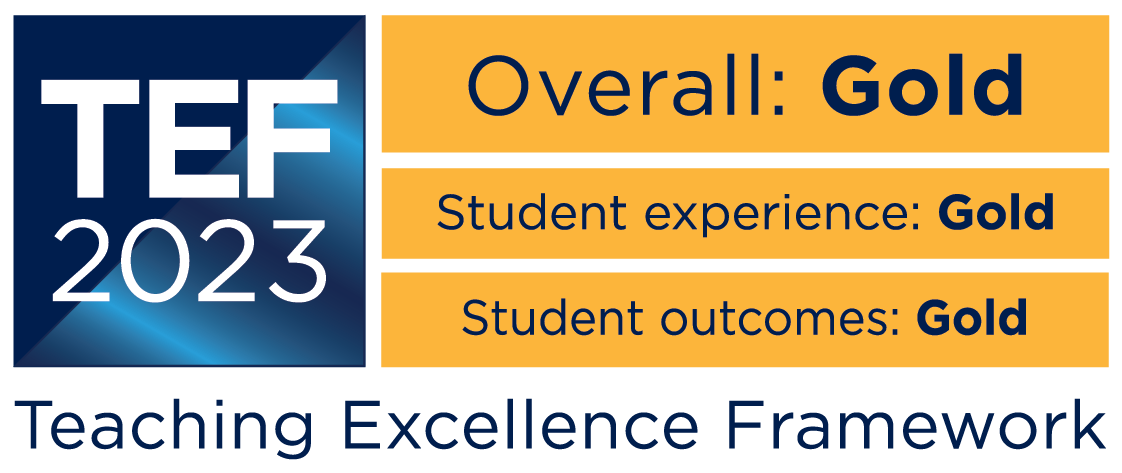
TEF Gold
Our undergraduate provision has been awarded Teaching Excellence Framework (TEF) Gold in all aspects - Overall, Student Experience, and Student Outcomes.

Graduate employability
95% of graduates are in employment, further study or other purposeful activity (Graduate Outcomes 2025).
Academic support
We’re a top 10 university for academic support (NSS 2025, UK universities).
Guardian University Guide
We're ranked 4th out of 86 universities for Sports Science, marking an impressive 65-place jump in just four years.


Important information
Every effort has been made to ensure the accuracy of our published course information, however our programmes are reviewed and developed regularly. Changes or cancellation of courses may be necessary to ensure alignment with emerging employment areas, to comply with accrediting body requirements, revisions to subject benchmark statements or as a result of student feedback. We reserve the right to make necessary changes and will notify all offer-holders of changes as and when they occur.
Get in touch
Looking for something else?

BSc (Hons) Sports Performance
Unlock your potential with the new BSc (Hons) Sports Performance programme, designed for those passionate about experiencing a career in the professional sports industry.
Our partners & accreditations